Josiah Wedgwood and Sons marks
14 entries from 10 sources. 7 give a period of use stated by a source. The other 7 are marks seen on pieces of known date, which shows only that the mark was in use then.
Go to the marks

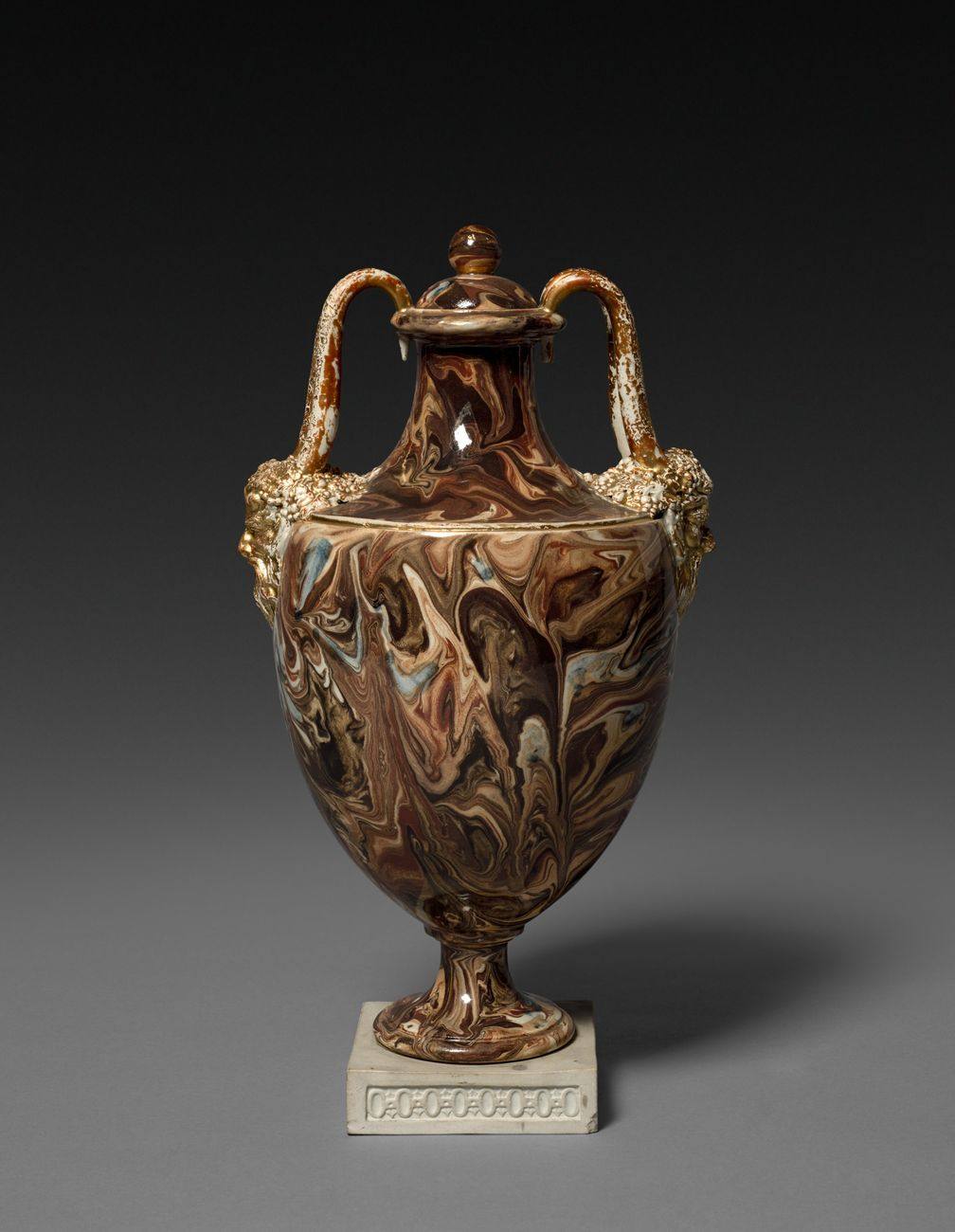
- Where Stoke-on-Trent, England
- Founded 1759
- Made Creamware
- Status Still trading
Founded 1759: (Source: the Victoria and Albert Museum). Status: still trading. (Source: the Victoria and Albert Museum)
What the sources say
The V&A says Josiah Wedgwood I established his own business in 1759 and began stamping the base of his wares as a mark of authenticity and quality. (Source: the Victoria and Albert Museum)
Chaffers (1912) says the partnership with Thomas Bentley began in 1768, the Etruria works opened in 1769, and Bentley died in 1780; pieces from that partnership carry Wedgwood and Bentley marks. (Source: W. Chaffers, 1912 edition)
Chaffers says a three-capital-letter code began in 1860 with the letter O for the year, and that the word ENGLAND was added to the mark in 1891. (Source: W. Chaffers, 1912 edition)
A V&A plate and dish made in 1864 carry impressed letter groups, one of which the V&A reads as date letters for 1864. (Sources: the Victoria and Albert Museum, records 1 and 2)
Burton and Hobson and Chaffers disagree about the three-letter code: one calls the letters random after 1868, the other gives a fixed scheme from 1860. (Sources: Burton and Hobson (1919) and W. Chaffers, 1912 edition)
The marks
14 Josiah Wedgwood and Sons entries
Each entry describes a mark in plain words, with how it was put on and the evidence for its date, in the words of its source.
-
Seen on a dated museum piece
Years: 1790
The name WEDGWOOD impressed (stamped) into the clay in capitals, on a bust and its pedestal.
- How it was applied
- Pressed into the clay
- Date evidence
- Seen on a piece in the Victoria and Albert Museum, dated: V&A object date 1790. Open the source
“WEDGWOOD' (impressed on pedestal base and reverse of bust)”
-
Period stated by the source
Years: 1768 to 1780
The word Etruria impressed on a bat, fixed inside the plinth of basalt vases and other large pieces, with the Wedgwood and Bentley name.
- How it was applied
- Pressed into the clay
- Date evidence
- W. Chaffers, 1912 edition gives this mark as: used between 1768 and 1780. Open the source
“This mark with the word ‘ Etruria ’ impressed on a bat, and fixed in the corner inside the plinth of old basalt ware vases and on other large pieces, occasionally on the pedestal of a bust, the letters being in relief ; used between 1768 and 1780.”
-
Seen on a dated museum piece
Years: 1769 to 1780
WEDGWOOD & BENTLEY impressed, with a catalogue number on intaglios and cameos.
- How it was applied
- Pressed into the clay
- Date evidence
- Seen on a piece in the Victoria and Albert Museum, dated: V&A dates the impressed piece to 1769-1780. Open the source
“Wedgwood / & Bentley / 238 (impressed)”
-
Seen on a dated museum piece
Years: 1769 to 1780
WEDGWOOD & BENTLEY : ETRURIA impressed in high relief on a mould.
- How it was applied
- Pressed into the clay
- Date evidence
- Seen on a piece in the Victoria and Albert Museum, dated: V&A dates the mould to 1769 - 1780. Open the source
“WEDGWOOD & BENTLEY : ETRURIA' (impressed in high relief in the round)”
-
Period stated by the source
Years: from 1780
WEDGWOOD in capitals or small letters, in varying sizes, stamped by chance (a large stamp on a small piece and the reverse).
- How it was applied
- Pressed into the clay
- Date evidence
- W. Chaffers, 1912 edition gives this mark as: attributed to the period after Bentley's death, and probably used for a time after Wedgwood died. Open the source
“Marks, varying in size, attributed to the period … after Bentley's death, and probably used for a time … after Wedgwood died.”
-
Seen on a dated museum piece
Years: 1805
WEDGWOOD with the date 2 FEBY 1805 on a tripod vase.
- How it was applied
- Pressed into the clay
- Date evidence
- Seen on a piece in the Victoria and Albert Museum, dated: V&A object date ca. 1805. Open the source
“WEDGWOOD 2 FEBY 1805”
-
Period stated by the source
Years: 1840
WEDGWOOD with ETRURIA above or below, stamped on dark blue stoneware vases and glazed ware.
- How it was applied
- Pressed into the clay
- Date evidence
- W. Chaffers, 1912 edition gives this mark as: adopted about 1840, but soon disused. Open the source
“These marks, rarely found upon pieces of a very high character … usually upon dark blue stoneware vases and glazed ware … were adopted about 1 840, but soon disused.”
-
Period stated by the source
Years: 1805 to 1815
WEDGWOOD printed in red or blue, sometimes gold, on the porcelain of this period.
- How it was applied
- Printed, in red, blue or gold
- Date evidence
- W. Chaffers, 1912 edition gives this mark as: made from about 1805 to 1815, always printed. Open the source
“The mark upon the porcelain made from about 1805 to 1815, always printed, either in red or blue, sometimes in gold.”
-
Period stated by the source
Years: from 1860
Three capital letters impressed as a supplementary mark. Chaffers says the first letter is the workman, the second the month and the third the year, beginning with O for 1860; Burton and Hobson call the letters random (see disagreements).
- How it was applied
- Pressed into the clay
- Date evidence
- W. Chaffers, 1912 edition gives this mark as: their use having only commenced in 1860 with the letter O, P denoting 1861. Open the source
“with the letter O, P denoting 1861, and so on, like the hall marks on plate.”
-
Seen on a dated museum piece
Years: 1864
Impressed letters GNS, read by the V&A as date letters for 1864, on a plate with the impressed words Wedgwood Pearl.
- How it was applied
- Pressed into the clay
- Date evidence
- Seen on a piece in the Victoria and Albert Museum, dated: V&A: date letters for 1864 (the plate itself is dated ca. 1867). Open the source
“Wedgwood Pearl GNS … date letters for 1864”
-
Seen on a dated museum piece
Years: 1864
Impressed letters and figure AX8 beside the painted date June 1864, on a dish.
- How it was applied
- Pressed into the clay
- Date evidence
- Seen on a piece in the Victoria and Albert Museum, dated: V&A object date 1864. Open the source
“Painted by W J Goode June 1864 … Wedgwood AX8”
-
Period stated by the source
Years: from 1878
The Wedgwood porcelain mark, printed in black and other colours, after fine porcelain was revived at Etruria.
- How it was applied
- Printed, in black and other colours
- Date evidence
- W. Chaffers, 1912 edition gives this mark as: The manufacture of fine porcelain was revived at Etruria, 1878, and is still continued. Open the source
“The manufacture of fine porcelain was revived at Etruria, 1878, and is still continued.”
-
Period stated by the source
Years: from 1891
The word ENGLAND added to the Wedgwood mark.
- How it was applied
- Pressed into the clay
- Date evidence
- W. Chaffers, 1912 edition gives this mark as: added to the mark in 1891. Open the source
“This word was added to the mark wedgwood in 1891, to comply with the new American Customs Regulations, known as the McKinley Tariff Act.”
-
Seen on a dated museum piece
Years: 1937
The words Wedgwood, Made in England and a letter H on a mug made for the 1937 coronation.
- How it was applied
- Printed
- Date evidence
- Seen on a piece in the Victoria and Albert Museum, dated: V&A object date 1937. Open the source
“Wedgwood / Made in England / H”
Dating clues
- Chaffers says the three capital letters, found as supplementary marks, show a piece is modern and began in 1860 with O, so P is 1861 and so on, like hall marks on plate. (Source: W. Chaffers, 1912 edition)
- The V&A reads the third letter of the group GNS on a plate as a date letter for 1864, which fits Chaffers's start of O for 1860 (S is the fifth letter from O). (Source: the Victoria and Albert Museum)
- Chaffers says a piece made at Etruria carries its own marks of identification in Josiah's time or later, but that unmarked old Wedgwood exists. (Source: W. Chaffers, 1912 edition)
- Burton and Hobson say Wedgwood marks are nearly all stamped and that a single letter indicates the year on modern wares. (Source: Burton and Hobson (1919))
Take care
- Burton and Hobson say three letters combined at random occur after 1868, which contradicts Chaffers's fixed scheme of 1860; do not rely on a handbook description of the letter code without checking the Wedgwood archive. (Source: Burton and Hobson (1919))
- Chaffers says Wedgwood's mark was forged or imitated in the eighteenth and nineteenth centuries and that some small blue and white medallions are marked Wedgwood and Co. (Source: W. Chaffers, 1912 edition)
- Chaffers says about 1840 a man named Smith set up a factory in Holland and stamped his ware Wedgwood, so the Staffordshire firm briefly added Etruria to its mark. (Source: W. Chaffers, 1912 edition)
- Chaffers says only the blue and white jasper plaques, medallions and portraits have the Wedgwood and Bentley mark; jasper vases of the old period carry only the word Wedgwood. (Source: W. Chaffers, 1912 edition)
Where sources differ
Both sides are shown with their sources. Neither is picked as right.
- The three-letter impressed code.
- Three capital letters began in 1860 with O for the year, P for 1861 and so on; the first letter is the workman, the second the month and the third the year. (Source: W. Chaffers, 1912 edition)
- Three letters combined at random occur after 1868. (Source: Burton and Hobson (1919))
- When printed porcelain marks were used again.
- Fine porcelain was revived at Etruria in 1878. (Source: W. Chaffers, 1912 edition)
- The printed WEDGWOOD porcelain mark 1805-15 and again after 1879. (Source: Burton and Hobson (1919))
In museum collections
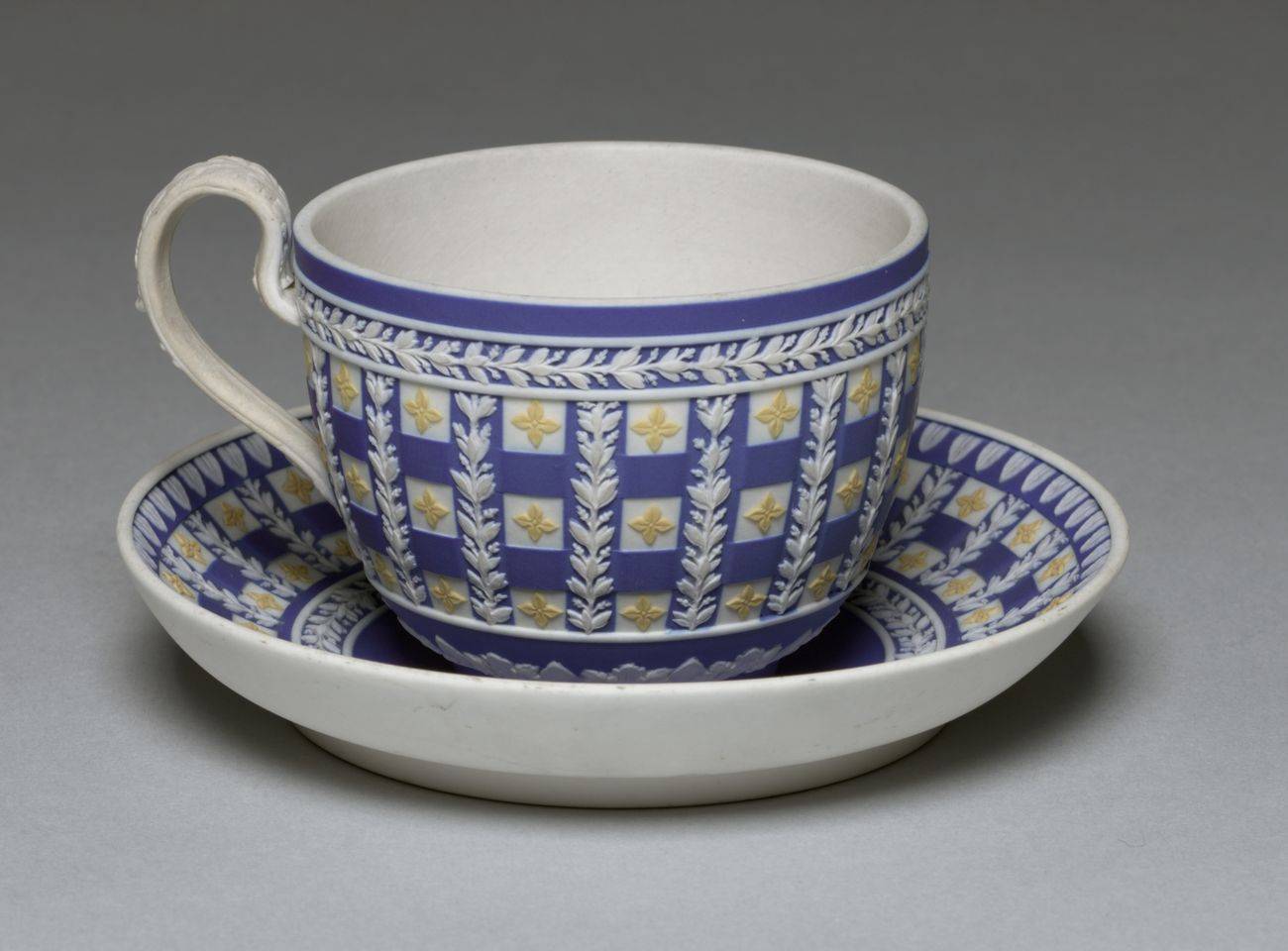
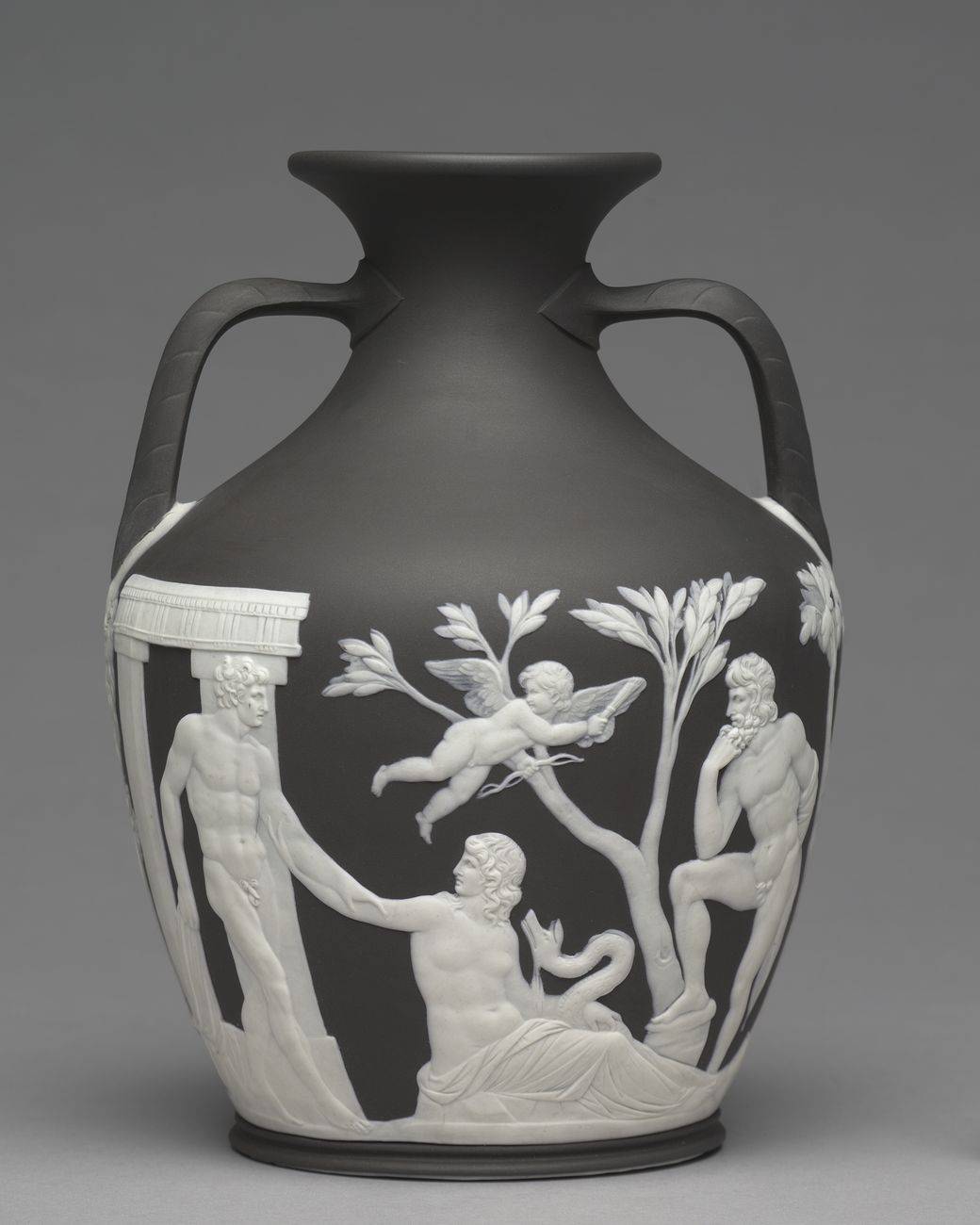
- Caneware Jar, c. 1795. Cleveland Museum of Art.
- Teapot, c. 1830. Cleveland Museum of Art.
What could not be confirmed
- No museum or archive page explaining the three-letter date code was found, so only the year letter (O for 1860, and S for 1864 on a dated V&A piece) is treated as supported; the workman and month letters rest on Chaffers alone.
- The two handbooks disagree about the three-letter code: Chaffers gives a fixed scheme from 1860 and Burton and Hobson call the letters random after 1868.
- No source used here gives the later changes to the date code in the twentieth century.
- The Burton and Hobson scan shows no page number beside the Wedgwood entries; its index lists pp. 100, 102 and 106.
- The end of the Wedgwood and Bentley partnership is dated only by Bentley's death in 1780 in Chaffers and by museum object dates of 1769 to 1780.
Sources
- Handbook of Marks on Pottery and Porcelain (Burton and Hobson). Macmillan (scan of the archive.org copy listed as 1919; first edition 1909), 1919. Opened 22 November 2026.
- Marks and Monograms on European and Oriental Pottery and Porcelain (W. Chaffers, 1912 edition). Reeves and Turner, London, 1912. Opened 22 November 2026.
- Tripod vase, Wedgwood, ca. 1805 (museum no. O149104). Victoria and Albert Museum. Opened 22 November 2026.
- Mug, Wedgwood, 1937 (museum no. O149977). Victoria and Albert Museum. Opened 22 November 2026.
- Plate, Wedgwood, ca. 1867 (museum no. O151011). Victoria and Albert Museum. Opened 22 November 2026.
- Dish painted by W. J. Goode, Wedgwood, 1864 (museum no. O151071). Victoria and Albert Museum. Opened 22 November 2026.
- Mould, Wedgwood, 1769-1780 (museum no. O1715444). Victoria and Albert Museum. Opened 22 November 2026.
- Strozzi Medusa, Wedgwood, 1769-1780 (museum no. O1770319). Victoria and Albert Museum. Opened 22 November 2026.
- Bust of Mercury, Wedgwood, 1790 (museum no. O1790190). Victoria and Albert Museum. Opened 22 November 2026.
- Wedgwood: An introduction. Victoria and Albert Museum. Opened 22 November 2026.
Photograph the piece and its mark
Velqo gives a first identification from photos of the piece and its mark.