Spode and Copeland marks
10 entries from 12 sources. 3 give a period of use stated by a source. The other 7 are marks seen on pieces of known date, which shows only that the mark was in use then.
Go to the marks

- Where Stoke-upon-Trent, England
- Founded 1776
- Made Earthenware
- Status Merged 2009
Founded 1776: (Source: Spode Museum Trust). Status: merged. (Source: Spode Museum Trust)
What the sources say
The Spode Museum Trust says Josiah Spode I established his own company in 1776 in Stoke, and that although he ran it for almost 30 years his productions were unmarked, so very few of the earliest pieces can be easily identified. (Source: Spode Museum Trust)
The museum says William Taylor Copeland acquired the business in 1833 in partnership with Thomas Garrett until 1847, and that the productions from this period were marked Copeland and Garrett. (Source: Spode Museum Trust)
Chaffers (1912) says the firm traded as W. T. Copeland, late Spode, until 1867 and then as W. T. Copeland and Sons; V&A records show impressed SPODE marks on pieces dated about 1800 to 1830. (Sources: W. Chaffers, 1912 edition and the Victoria and Albert Museum, records 1, 2 and 3)
Burton and Hobson give 1833 for Copeland's purchase of Spode's business and 1835 to 1847 for the Garrett partnership, which differs from the museum's 1833. (Sources: Burton and Hobson (1919) and Spode Museum Trust)
The marks
10 Spode and Copeland entries
Each entry describes a mark in plain words, with how it was put on and the evidence for its date, in the words of its source.
-
Seen on a dated museum piece
Years: 1800 to 1820
The word SPODE impressed in the clay, on a Willow pattern plate dated by the V&A 1800-20.
- How it was applied
- Pressed into the clay
- Date evidence
- Seen on a piece in the Victoria and Albert Museum, dated: V&A object date 1800-1820. Open the source
“Impressed mark 'SPODE'”
-
Seen on a dated museum piece
Years: 1815
SPODE and an X painted in blue, with SPODE and the number 44 impressed, on a plate dated by the V&A about 1815.
- How it was applied
- Painted by hand
- Date evidence
- Seen on a piece in the Victoria and Albert Museum, dated: V&A object date ca. 1815. Open the source
“SPODE' and a 'X”
-
Seen on a dated museum piece
Years: 1822 to 1830
The words SPODE's NEW STONE on a plate.
- How it was applied
- Pressed into the clay
- Date evidence
- Seen on a piece in the Victoria and Albert Museum, dated: V&A object date ca. 1822-1830. Open the source
“SPODE's NEW STONE”
-
Period stated by the source
The word Spode surmounting the words Felspar Porcelain in a garland.
- How it was applied
- Printed
- Date evidence
- W. Chaffers, 1912 edition gives this mark as: Chaffers gives no date for this mark. Open the source
“in a garland, surmounted by the name “ Spode.””
-
Period stated by the source
Years: 1833 to 1847
The name Copeland and Garrett, which the museum says was the mark of this period. Museum examples show it impressed in a circle round LATE SPODE, or printed under a crown with a pattern name.
- How it was applied
- Method not stated by the source, in blue or other colours
- Date evidence
- Spode Museum Trust gives this mark as: productions from this period were marked 'Copeland and Garrett'. Open the source
“In 1833 William Taylor Copeland, William Copeland’s son, acquired the business in partnership with a Thomas Garrett until 1847 and the factory’s productions from this period were marked ‘Copeland and Garrett’.”
-
Seen on a dated museum piece
Years: 1833 to 1847
COPELAND & GARRETT arranged in a circle round LATE SPODE, with the pattern name Venice.
- How it was applied
- Pressed into the clay
- Date evidence
- Seen on a piece in the Victoria and Albert Museum, dated: V&A object date 1833-1847. Open the source
“COPELAND & GARRETT I' arranged in a circle round 'LATE SPODE'”
-
Seen on a dated museum piece
Years: 1833 to 1847
COPELAND & GARRETT under a crown, encircling the pattern name NEW BLANCHE.
- How it was applied
- Printed
- Date evidence
- Seen on a piece in the Victoria and Albert Museum, dated: V&A object date 1833-1847. Open the source
“COPELAND & GARRETT' under a crown, encircling the pattern name 'NEW BLANCHE'”
-
Period stated by the source
Years: from 1847
The name COPELAND, alone or with LATE SPODE or Stone China, in the marks Chaffers lists as used from 1847; he says one plain COPELAND mark was used 1847-56.
- How it was applied
- Method not stated by the source
- Date evidence
- W. Chaffers, 1912 edition gives this mark as: The marks that follow have been used by the firm from 1847 to the present. Open the source
“The marks that follow have been used by the firm from 1847 to the”
-
Seen on a dated museum piece
Years: 1847 to 1867
The word COPELAND impressed on a stoneware beaker.
- How it was applied
- Pressed into the clay
- Date evidence
- Seen on a piece in the Victoria and Albert Museum, dated: V&A object date ca. 1847-1867. Open the source
“COPELAND”
-
Seen on a dated museum piece
Years: 1853
The words Copeland 12 within a cartouche, applied and impressed, with a moulded diamond registration mark, on a Harvest Barrel jug.
- How it was applied
- Pressed into the clay
- Date evidence
- Seen on a piece in the Victoria and Albert Museum, dated: V&A object date 1853. Open the source
“Copeland 12' within a cartouche”
Dating clues
- The museum says Josiah Spode I's productions were unmarked, so very few of the earliest Spode pieces can be easily identified. (Source: Spode Museum Trust)
- Chaffers says that from 1833 until 1847 the style of the firm was Copeland and Garrett, which is the mark distinguishing the productions of that period. (Source: W. Chaffers, 1912 edition)
- Chaffers says the firm traded as W. T. Copeland, late Spode, until 1867, when Alderman Copeland took his four sons into partnership and the style became W. T. Copeland and Sons. (Source: W. Chaffers, 1912 edition)
- Chaffers says the name Spode is sometimes impressed on later Copeland ware. (Source: W. Chaffers, 1912 edition)
Take care
- Chaffers says many of Spode's early marks were stamped in the clay and others printed at the back in the colour of the pattern, and that on china it was usually done with the pencil by the decorator. (Source: W. Chaffers, 1912 edition)
- Chaffers says some specimens in the Schreiber Collection are marked with the word Spode written in red in ordinary manuscript, with a number. (Source: W. Chaffers, 1912 edition)
- Burton and Hobson list Copeland as Spode's London agent and afterwards partner, who bought Spode's business in 1833 with Garrett a partner from 1835 to 1847, which differs from the museum's 1833 to 1847 partnership. (Source: Burton and Hobson (1919))
Where sources differ
Both sides are shown with their sources. Neither is picked as right.
- Start of the Copeland and Garrett partnership.
- William Taylor Copeland acquired the business in 1833 in partnership with Thomas Garrett until 1847. (Source: Spode Museum Trust)
- Copeland and Garrett was the style of the firm from 1833 until 1847. (Source: W. Chaffers, 1912 edition)
- W. Copeland bought Spode's business in 1833; Garrett a partner 1835-47. (Source: Burton and Hobson (1919))
- Death of Josiah Spode II.
- The second Josiah Spode died in 1827. (Source: W. Chaffers, 1912 edition)
- Josiah Spode II died in 1828. (Source: Spode Museum Trust)
- When W. T. Copeland took sole control.
- In 1846 William Taylor Copeland acquired the company outright (the same page gives the Garrett partnership until 1847). (Source: Spode Museum Trust)
- The partnership was dissolved in 1847. (Source: W. Chaffers, 1912 edition)
In museum collections
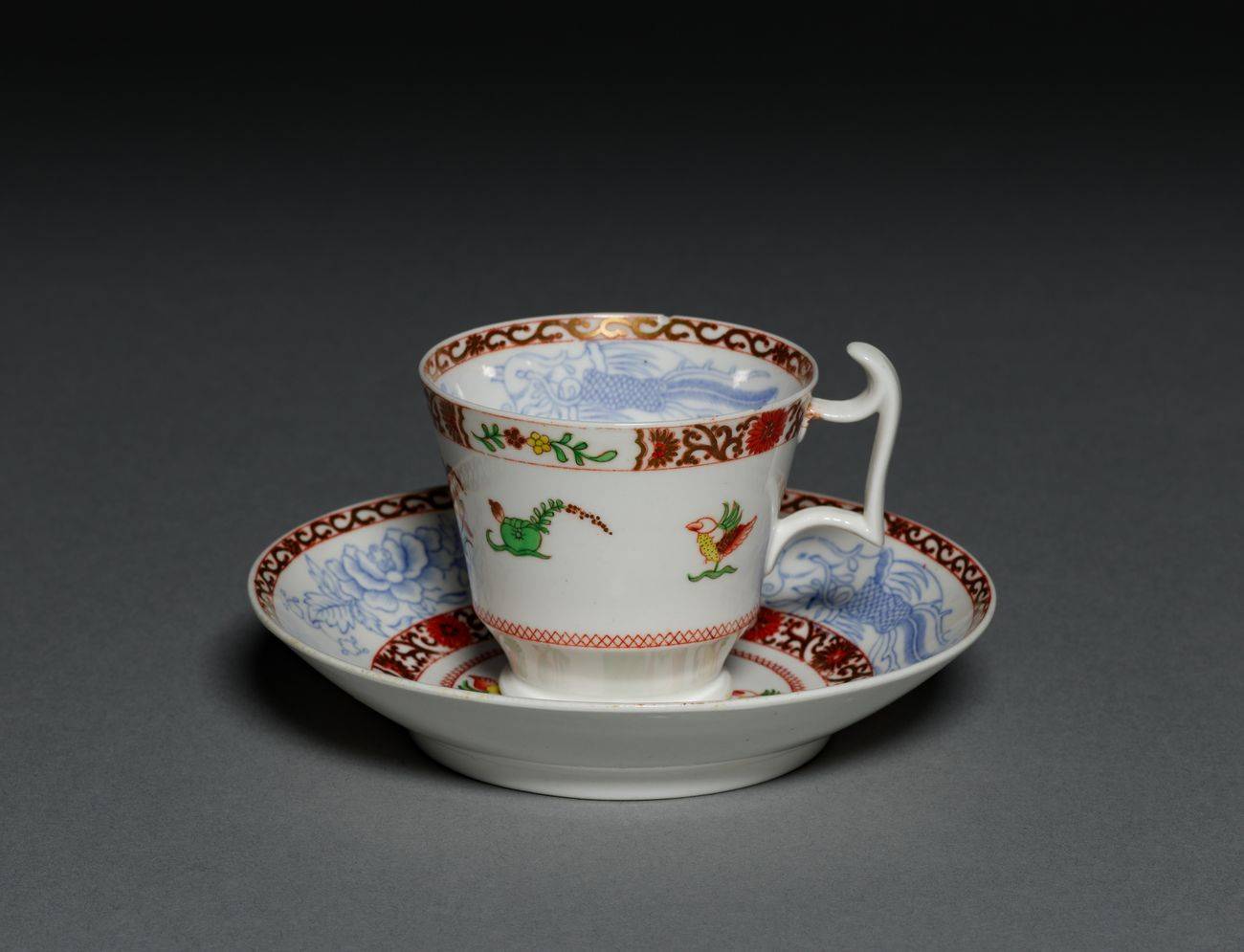
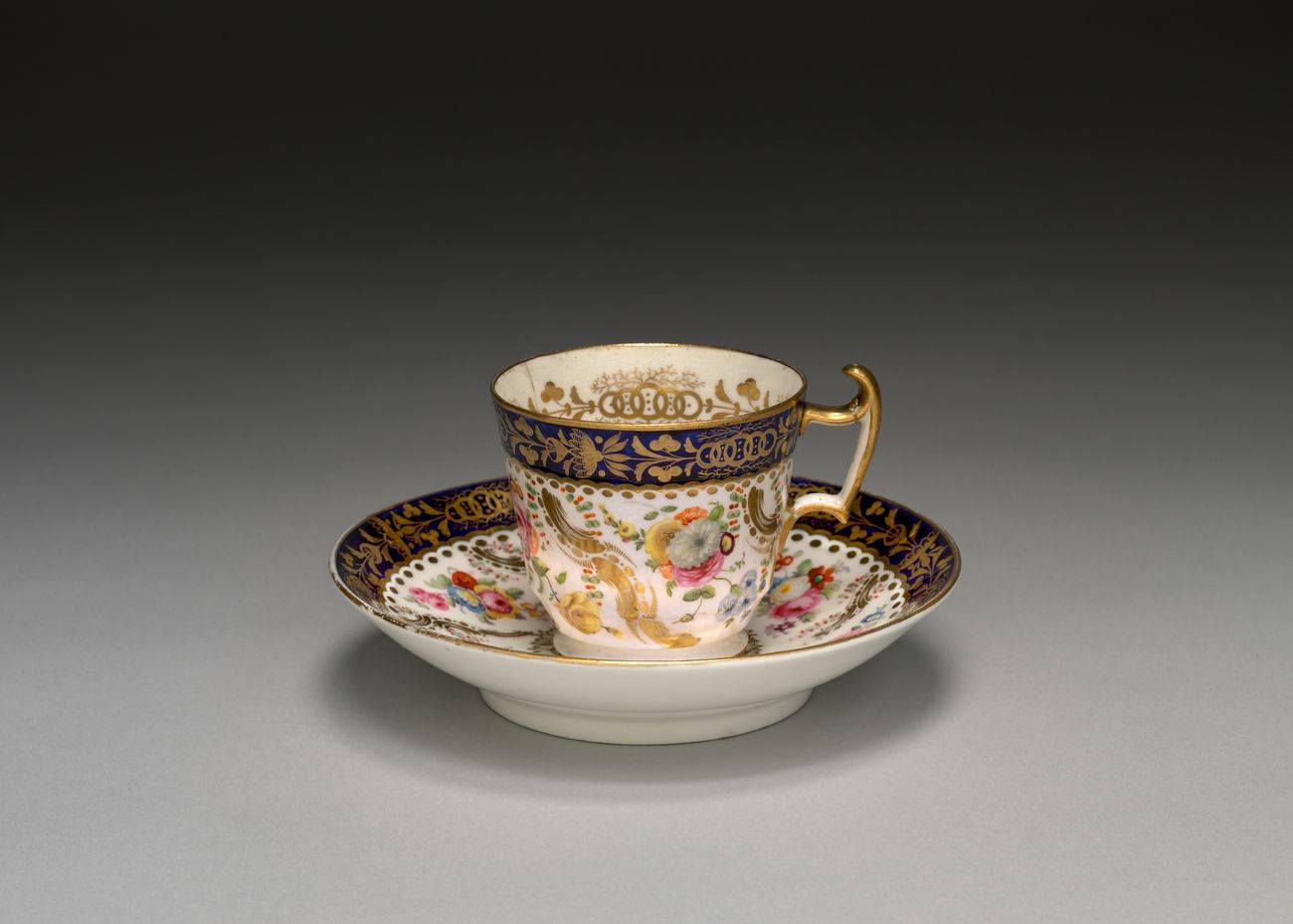
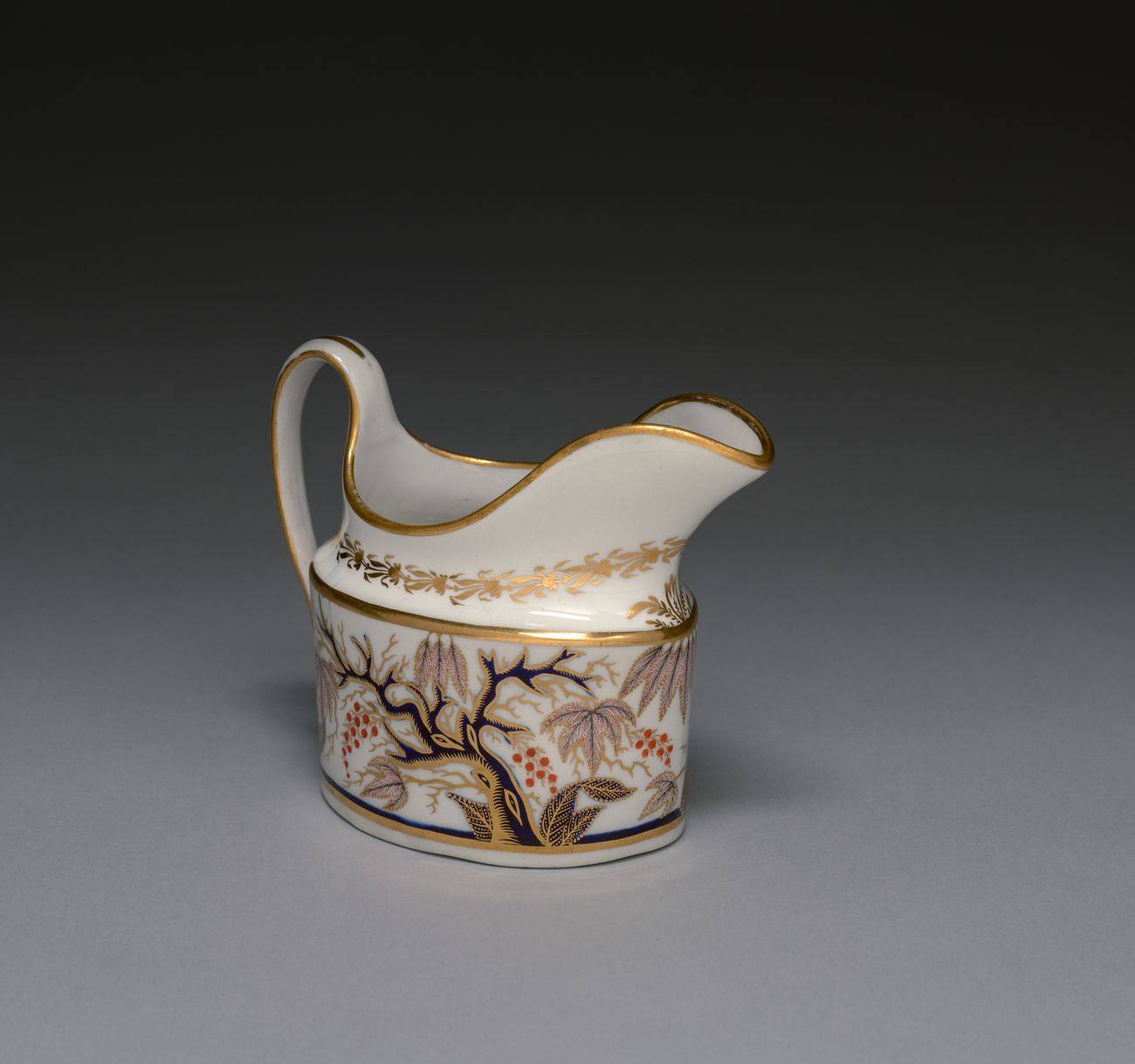
What could not be confirmed
- No source used here gives dated marks or a date code for Spode and Copeland ware after 1867.
- No source says when the SPODE mark began: the museum says Josiah Spode I's wares were unmarked, and the earliest dated V&A pieces with SPODE are from about 1800 to 1820.
- The Cleveland examples are dated only to the late 1700s or the 1700s to 1800s and their records give no mark, so they show Spode ware but not a mark.
- There are no photographs of the marks.
Sources
- Handbook of Marks on Pottery and Porcelain (Burton and Hobson). Macmillan (scan of the archive.org copy listed as 1919; first edition 1909), 1919. Opened 22 November 2026.
- Marks and Monograms on European and Oriental Pottery and Porcelain (W. Chaffers, 1912 edition). Reeves and Turner, London, 1912. Opened 22 November 2026.
- The Copeland Period Part 1, 1833-1900. Spode Museum Trust. Opened 22 November 2026.
- The First Spode Period 1776-1833. Spode Museum Trust. Opened 22 November 2026.
- Timeline of Spode. Spode Museum Trust. Opened 22 November 2026.
- Dish, Copeland and Garrett, 1833-1847 (museum no. O11589). Victoria and Albert Museum. Opened 22 November 2026.
- Beaker, Copeland and Co., ca. 1847-1867 (museum no. O148706). Victoria and Albert Museum. Opened 22 November 2026.
- Plate, Spode Ceramic Works, ca. 1815 (museum no. O149164). Victoria and Albert Museum. Opened 22 November 2026.
- New Blanche dish, Copeland and Garrett, 1833-1847 (museum no. O149241). Victoria and Albert Museum. Opened 22 November 2026.
- Plate, Spode Ceramic Works, ca. 1822-1830 (museum no. O150911). Victoria and Albert Museum. Opened 22 November 2026.
- Harvest Barrel, Copeland and Co., 1853 (museum no. O151048). Victoria and Albert Museum. Opened 22 November 2026.
- Plate, Spode Ceramic Works, 1800-1820 (museum no. O77999). Victoria and Albert Museum. Opened 22 November 2026.
Photograph the piece and its mark
Velqo gives a first identification from photos of the piece and its mark.